Pheromone Monitoring Lure for Rhynchophorus ferrugineus, Red Palm Weevil
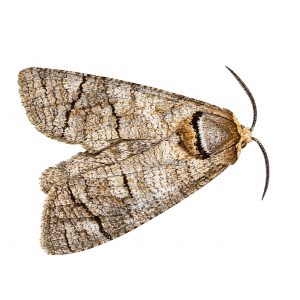
Red Palm Weevil is a serious pest of a number of palm species including coconuts and oil palm. Originally a pest of south and south‐east Asia, it has spread to the Arabian Peninsula, North Africa and Southern Europe where it has become an important pest of date palms. It attacks both the crown and base of the palm tree, often laying eggs in holes made by other insects, such as Oryctes. In Date growing regions it is frequently attracted to the base of the tree where suckers have been removed for propagation or cosmetic purposes. Three major generation peaks have been identified in some countries.
Available singly, price discounts for bulk orders. Prices on application.
Description
Directions for Use
The following are general recommendations for trapping of red palm weevils. Refer to local authorities for any recommendations in light of the local conditions and the experience gained.
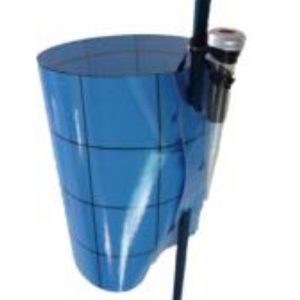
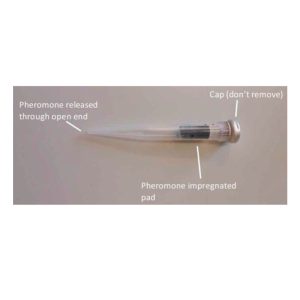
Monitoring: Use the pheromone lure with a kairomone dispenser and/or food bait such as sugarcane, fresh palm stem, apples or other attractants. As the food bait will deteriorate in the field, traps must be checked regularly and food replaced. Use one of several purpose designed traps or a bucket with a lid, with volume of around 15L and 30cm height, with 4 side openings and 4 openings on the lid all of about 10cm². Place the lure in a holder or under the lid of the trap. The bottom of the trap can be filled with water to maintain a high humidity level and to drown the weevils. As the weevils enter traps by walking, traps should be placed on the ground or buried in the soil up to the openings to facilitate ease of entrance. Place at a density of 1 per km². Greater numbers may be necessary to pinpoint local areas of higher populations.
Mass Trapping: Use the same procedure and materials as for monitoring. The aim is to remove enough adults to prevent further infestations developing. This will not remove larvae already in the date palm trunks, but can prevent the development of the population which would cause damage in subsequent seasons. Densities of at least 1 trap/ha are recommended. Use greater densities when populations are high. Traps should be monitored and maintained throughout the year and pheromones changed on a continuous basis. The insect is present throughout the year so trap catch should be recorded regularly and dead insects removed.
Storage Instructions
This product is sealed in impermeable packaging for storage and shipping. Keep product away from direct sunlight, heat, sparks and open flame. The dispensers and systems should be kept under good storage conditions at below 15°C when the dispensers will retain their activity and attraction for a minimum of 18 months. Bulk storage of dispensers for periods of up to 24 months is possible by refrigeration at temperatures of 4°C or below. Keep dispensers inside their sealed packaging until use. When replaced, the old dispenser should be completely removed from the area of use and destroyed to prevent interference with the fresh replacement/ recharge dispenser.
| Latin Name | Rhynchophorus ferrugineus |
|---|---|
| Common Name | Red Date Palm Weevil |
| Pheromone Active | 4-Methyl-5-nonanol (≥95%) 4-Methyl-5-nonone (≥95%) |
| Important | Use in combination with additional kairomone lures and natural food volatiles. This lure attracts both male and female weevils |
| Dose | 700 mg |
| Product Designation | Aggregation pheromone containing active chemical and antioxidant |
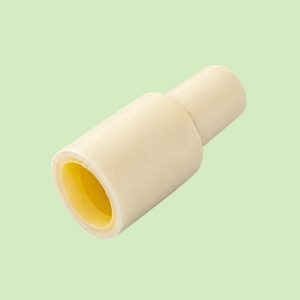
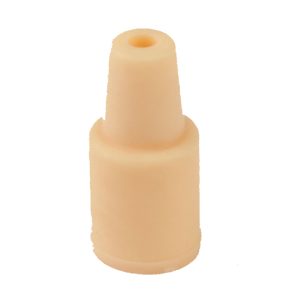
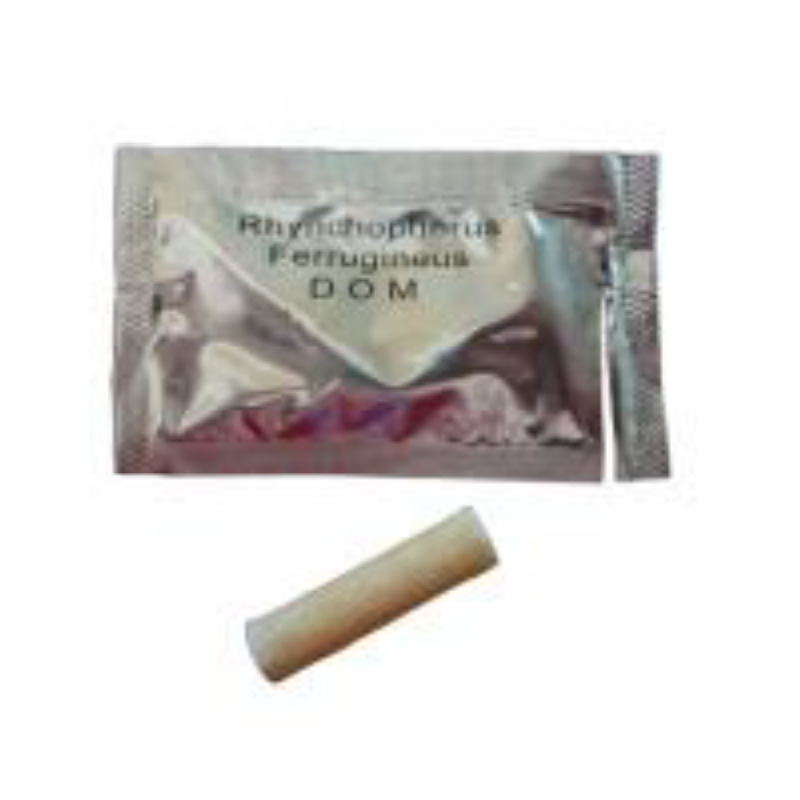
| Dispenser | Cellulose acetate and wax plug |
| Active Life | 70–90 days (temperature dependent) |
| Packaging | Individually Sachet Packed |
| Sachet Material | Foil Lined Laminate |
| Shelf Life | Up to 2 years when stored in cool, dry conditions |
| Recommended Trap | Bucket Trap or specially develop Red Palm Weevil Traps |