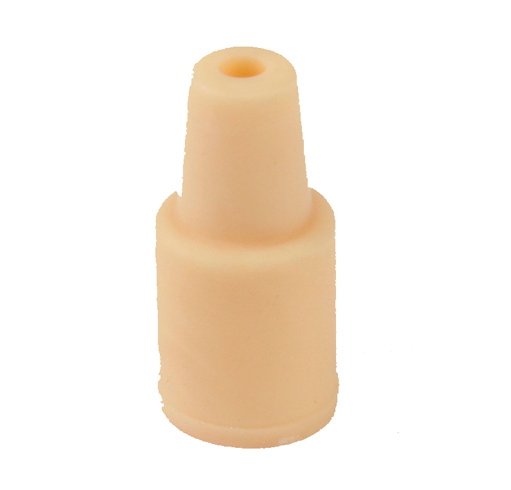
Pheromone Monitoring Lure for Ceratitis capitata, Mediterranean Fruit Fly
This is a very important pest of fruit throughout the Mediterranean, Africa, central and southern America and Western Australia. The female lays eggs under the surface of maturing fruits. The larvae consume the fruit and render it inedible. There are as many as six generations per year in hot countries. In more temperate regions the number is usually 2 to 3 per year. The fly can move from one crop to another so that it is not restricted to the seasonality of one crop.
Available singly, price discounts for bulk orders. Prices on application.
Description
Directions for Use
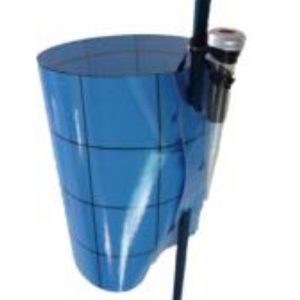
The McPhail trap with the lure basket baited with the Trimedlure plug is recommended for use in most countries. The Delta Trap can also be used. It should be noted that the exact time of insect emergence will vary with location and seasonal variation and the susceptibility of the crop to be monitored. In the more temperate regions the insect is predominantly a problem through the spring and summer. In the tropics it may be present all year round. The traps should be placed at head height within the tree canopy and located centrally within the experimental area being monitored with at least 50m between each trap. One trap should be sufficient to monitor up to 3 hectares of a uniform orchard. In the case of irregular areas 1 trap per hectare is recommended.
A minimum of 2 traps is recommended regardless of field size. Lures should be changed every 2‐3 months. The sticky inserts should normally be changed when the lures are changed. In situations where high insect catches or dusty conditions have led to the deterioration of the glue surface the inserts should be changed. It is recommended that at each reading the trapped insects and any other debris be removed and the glue stirred. Catches should be recorded weekly in low populations but more frequently in orchards with high populations. To avoid affecting the efficiency of the trapping system it is strongly recommended that traps be used for only the one species. Never use the lures for other species in this trap.
Storage Instructions
This product is sealed in impermeable packaging for storage and shipping. Keep product away from direct sunlight, heat, sparks and open flame. The dispensers and systems should be kept under good storage conditions at below 15°C when the dispensers will retain their activity and attraction for a minimum of 18 months. Bulk storage of dispensers for periods of up to 24 months is possible by refrigeration at temperatures of 4°C or below.
Keep dispensers inside their sealed packaging until use. When replaced, the old dispenser should be completely removed from the area of use and destroyed to prevent interference with the fresh replacement/ recharge dispenser.
| Latin Name | Ceratitis capitata (Family: Tephritidae) |
|---|---|
| Common Name | Mediterranean Fruit Fly |
| Pheromone Active | Trimedlure Tert-butyl (±)-4(or 5)-chloro-2-methyl cyclohexane carboxylate |
| Product Designation | Pheromone containing active chemical and antioxidant |
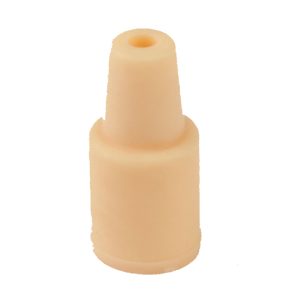
| Dispenser | Cellulose plug coated in special waxes |
| Dose | 1.3g |
| Active Life | 2–3 months (temperature dependent) |
| Packaging | Individually sachet packed |
| Sachet Material | Foil Lined Laminate |
| Shelf Life | Up to 2 years when stored in cool, dry conditions |
| Recommended Trap | McPhail trap with a lure basket or Delta Trap |