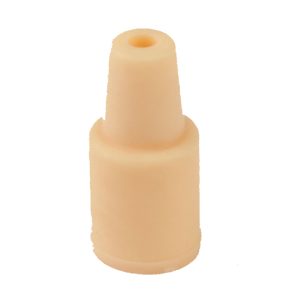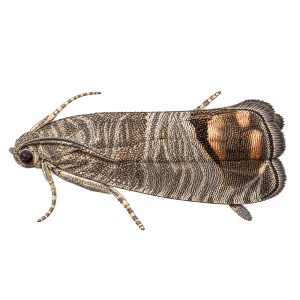
Pheromone Monitoring Lure for Aonidiella aurantii, the California Red Scale
California Red Scale is a major pest of citrus in most growing areas of the world. An infestation is indicated by the presence of numerous, small, circular and reddish-brown scales that occur on branches, leaves and fruit. An attack may cause down grading of fruit and reduced plant vigour. California red scale, Aonidiella aurantii, starts its life cycle as a crawler that emerges from a female scale, the crawler finds a leaf, twig or fruit to settle down on and inserts its threadlike mouthpart.
If female, the scale moults twice and matures through 2 nymphal instars into the virgin female stage, that is receptive to mating with a male. If male, the scale moults from 1st to 2nd instar, then pre-pupa, pupa, and finally becomes a winged adult. The entire lifecycle requires about 6 weeks to complete. There can be 4 to 7 generations per annum depending on climate and location. If fruit is infested with more than 10 scales and they are not washed off in the packinghouse, then the fruit may be downgraded.
California red scale injects a toxin when it feeds. Trees that become heavily infested experience dieback of branches leading to lower fruit production and poor health of the tree.
Available singly, price discounts for bulk orders. Prices on application.
Description
Directions for Use
Vertical White Sticky Traps are recommended, used in conjunction with a pheromone capsule. Scales should be monitored for the period of risk of attack. The traps should be placed at head height on the north side of the tree canopy with at least 20m between each trap. Use traps at a density of 5 per hectare in small non-uniform orchards and at a density of 2 per hectare in large uniform orchards. The lures should be changed every 6 to 8 weeks and the sticky traps changed when the sticky material on it has become thin or when debris or non target species have reduced its catching efficiency significantly. Insect catches should be recorded weekly or more frequently in groves with high populations. An accurate interpretation of catch records, for timing control measures, will vary from country to country and on the threshold set for the target species. To avoid affecting the efficiency of the trapping system it is strongly recommended that traps be used for only the one species. Never use the lures for other species in this trap.
Storage Instructions
This product is sealed in impermeable packaging for storage and shipping. Keep product away from direct sunlight, heat, sparks and open flame. The dispensers and systems should be kept under good storage conditions at below 15°C when the dispensers will retain their activity and attraction for a minimum of 18 months. Bulk storage of dispensers for periods of up to 24 months is possible by refrigeration at temperatures of 4°C or below. Keep dispensers inside their sealed packaging until use. When replaced, the old dispenser
should be completely removed from the area of use and destroyed to prevent interference with the fresh replacement/ recharge dispenser.
| Latin Name | Aonidiella aurantii |
|---|---|
| Common Name | California Red Scale |
| Pheromone Active |
3-Methyl-6-isopropenyl-9-decenyl acetate (Z)-3-Methyl-6-isopropenyl-3,9-decadienyl acetate |
| Dose | 1 mg |
| Product Designation | Pheromone containing active chemical and antioxidant |
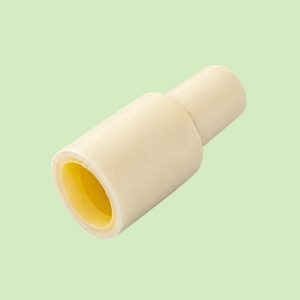
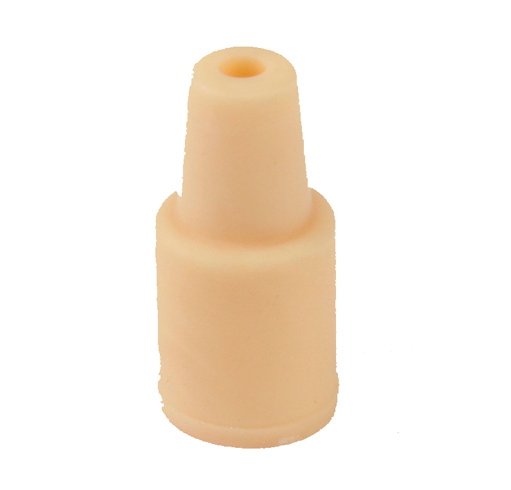
| Dispenser | Septa |
| Material | Rubber |
| Active Life | 6–8 weeks (temperature dependent) |
| Packaging | Individually Sachet Packed |
| Sachet Material | Foil Lined Laminate |
| Shelf Life | Up to 2 years when stored in cool, dry conditions |