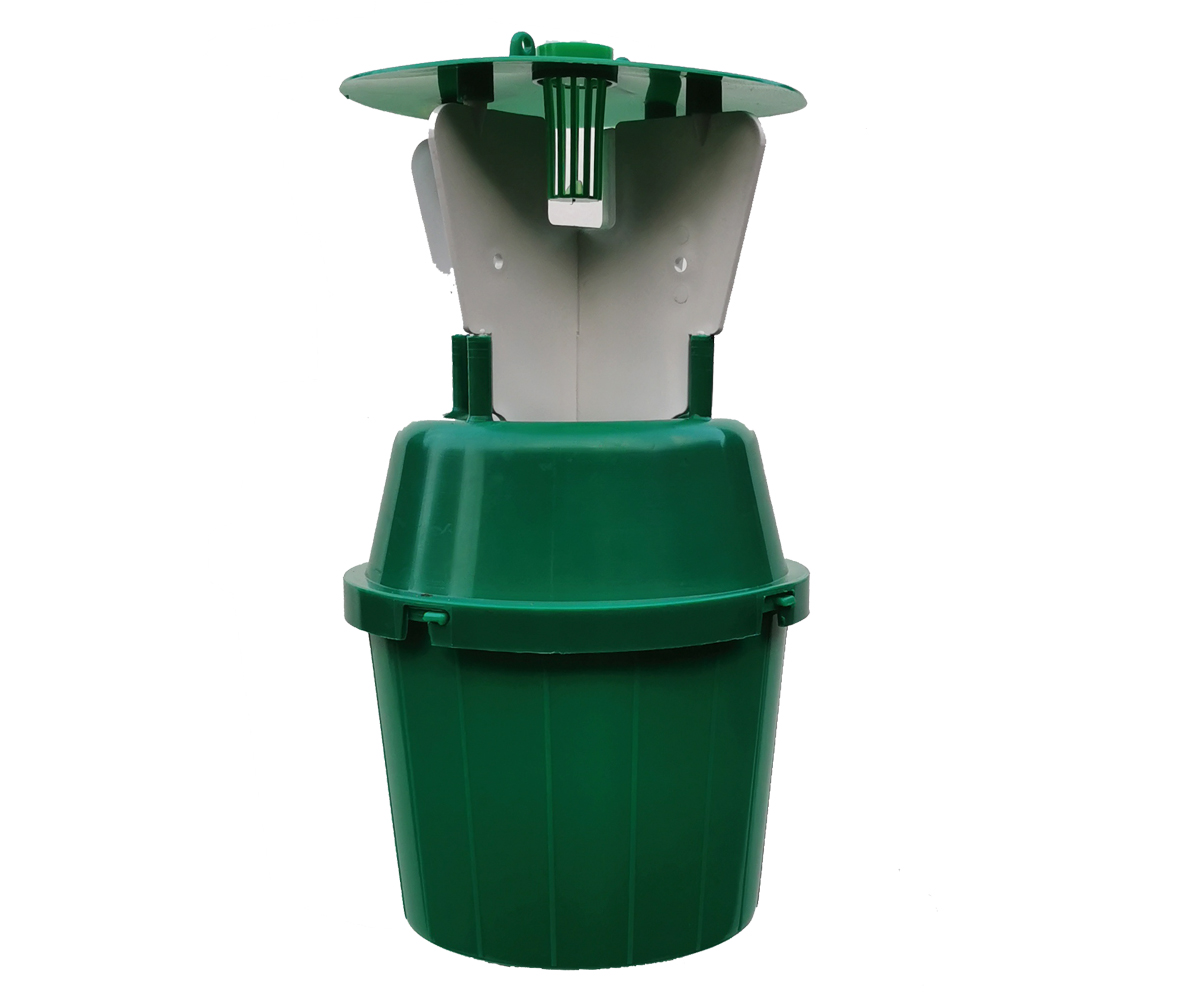
Strawberry Blossom Weevil Trap
The attractant dispenser contains a 4 component blend of a male produced aggregation pheromone and plant volatiles that are attractive to Anthonomus rubi adults.
The attractant is loaded onto two dispensers that are contained within a single paper sachet – 3 components on one dispenser and 1 component on the other.
£15.00
Description
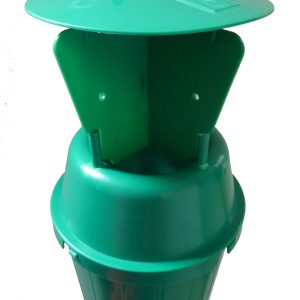
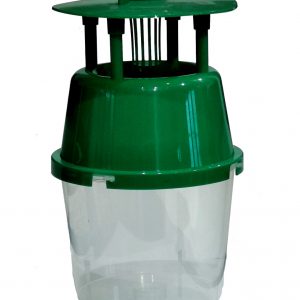
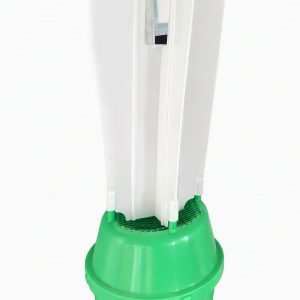
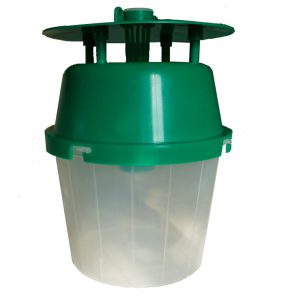
This inner paper sachet should not be opened but placed at the top of the interlocking vanes, hanging in the sapce
below th elid. The paper sachet is packed in an outer foil laminate sachet for transportation and storage. Traps should
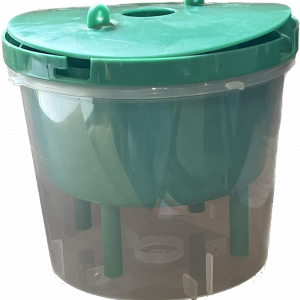
be placed at ground level. Add water to the bucket section with a thin layer of oil or detergent to break surface tension
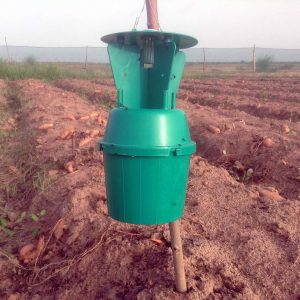
to aid capture. Traps should be held upright using wires, collars or with rods, or immersed into the soil. The weevils
enter by flying or walking. In strawberries, the weevils attack the flower buds at all heights and the optimum height to
deploy the traps is not yet fully understood but in trials traps at crop height and ground level caught the most weevils.
Deploying the traps at the edges of field next to hedges where weevils are likely to have overwintered will give the
most sensitive, early warning of the start of crop invasion. For tunnels, traps should be set at the ends, near the
entrance, where weevils are likely to enter from hedgerows or adjacent infected crops.
Mass Trapping Potential
Further work is ongoing to understand and establish the relationship between monitoring traps and weevil
populations. Experimental application rates of 25-36 traps per ha are suggested at the start of flower extension. Test
results so far suggest that the traps and lures may be sufficient to mass trap individuals when there are low population
densities. It is also likely that traps will perform better on crops which come into flower later (e.g. late spring planted,
or everbearers that are de-blossomed early) as there is greater chance to trap out weevils before damage can be done.
Furthermore, the traps may give best results if they are deployed continuously through the season. They are known to
catch the newly emerged adults (that are in reproductive diapause) in July-August and will deplete populations
throughout the growing season if deployed continuously.
Storage Instructions
The lure is sealed in impermeable packaging for storage and shipping. Keep product away from direct sunlight, heat,
sparks and open flame. The dispensers should be kept under good storage conditions ideally in refrigerator at 4°C but
at least below 15°C. Keep dispensers inside their sealed packaging until use. When replaced, the old dispenser should
be completely removed from the area of use to prevent interference with the fresh replacement/ recharge dispenser
Related products